
Booking a food truck for your office sounds simple: find a truck, pick a date, done. Then the property manager asks for a certificate of insurance naming the building as additional insured, the truck asks where it can park relative to the fire lane, and someone in facilities wants to know about propane. Suddenly the "fun lunch idea" is a project.
It doesn't have to be. Office buildings and corporate campuses are actually some of the best food truck venues in New Jersey — private property, real parking, and a built-in crowd that shows up hungry at noon. The bookings that go sideways almost always skip one of the same seven steps. Here's the full process, in order, including the parts most planners learn the hard way.
Step 1: Get property approval first — not last
This is the step that derails more office bookings than anything else, because the person planning the lunch usually isn't the person who controls the parking lot.
If you rent space in a multi-tenant building, the property manager has to sign off before any truck rolls in. If you're on a corporate campus, that's facilities or workplace services. Either way, ask before you book, because they'll have requirements — and one of them (insurance) takes a few days to handle.
What property managers typically want to know: where exactly the truck will park, the hours it will be on site, proof of insurance naming the property as additional insured, and confirmation the truck won't block fire lanes, loading docks, or required tenant parking. Bring answers to those four questions and approval is usually a same-day yes.
Step 2: Pin down headcount and budget
You need a realistic guest count before you can get a meaningful quote, because food truck pricing is built on two numbers — a per-person price and a per-truck minimum (in NJ, minimums typically run $1,000–$2,500).
Two pieces of math worth doing up front:
The minimum math. If your headcount times the per-person price is below the truck's minimum, you pay the minimum anyway. Forty people at $20 a head is $800 against a $1,500 minimum — you're better off opening the invite to more of the building.
The throughput math. One truck window serves roughly 75–100 people per hour. If 150 people break for lunch at exactly noon, one truck means 40-minute lines. The fix is either a second truck or a staggered window ("floors 1–3 at 11:45, floors 4–6 at 12:30").
Decide who pays, too. Employer-paid (the company picks up the tab) is the model that consistently works — turnout is high and the event lands as a real perk. Setups where employees pay their own way at the window are much harder to make worthwhile for the truck, which means the good trucks tend to decline them.
Step 3: Pick the truck — for the crowd, not for you
The best office event trucks share three traits: a menu most people can say yes to, speed at the window, and reliability. A brilliant but slow truck is a worse office booking than a very good fast one.
A few selection rules that hold up:
Crowd-pleasers outperform adventurous picks at the office. Tacos, smash burgers, grilled cheese, Mediterranean bowls — menus where 95% of your coworkers find something they want. Save the experimental concept for a smaller team outing.
Check dietary coverage. You need at least one solid vegetarian option, and you should ask about gluten-free and vegan up front. One in ten of your guests will quietly skip lunch if there's nothing they can eat — and they'll remember.
Ask about office experience specifically. Trucks that regularly do corporate service know how to pre-stage food for a noon rush. Trucks that mostly do festivals sometimes don't.
This is also where a network beats a cold search. Instead of messaging trucks one at a time on Instagram and hoping for replies, a coordinator who works with dozens of vetted NJ trucks can shortlist the right fit for your headcount, building, and budget in one pass.
Step 4: Lock the date with a real agreement
A DM thread saying "see you on the 14th!" is not a booking. Get a written agreement that states the date, arrival and service times, location, menu and per-person price, the minimum, the deposit, and — critically — the weather and cancellation terms.
Two things to look for: what happens if you need to reschedule (most trucks will move a date with enough notice rather than charge a cancellation fee), and what happens if the truck cancels. Mechanical failures happen to even the best-run trucks. A solo truck canceling at 9am leaves you with nothing; a coordinator with a network can usually have a replacement truck on site by lunch.
Weekday lunch slots fill slower than weekend dates, so two to four weeks of lead time is usually comfortable for an office event. For December holiday lunches or anything in peak season, give it six to eight weeks.
Step 5: Handle the paperwork — COI, permits, fire rules
Here's the part nobody warns first-time planners about, and the reason Step 1 said to start early.
Certificate of insurance (COI). Nearly every commercial property in NJ requires the truck to carry general liability insurance — $1 million per occurrence / $2 million aggregate is the standard ask — and to provide a COI naming the property owner and/or management company as additional insured. The truck's insurance agent issues this; it usually takes a couple of days. Get the exact legal entity name from your property manager, because "named wrong on the COI" is the most common reason trucks get turned away at the gate.
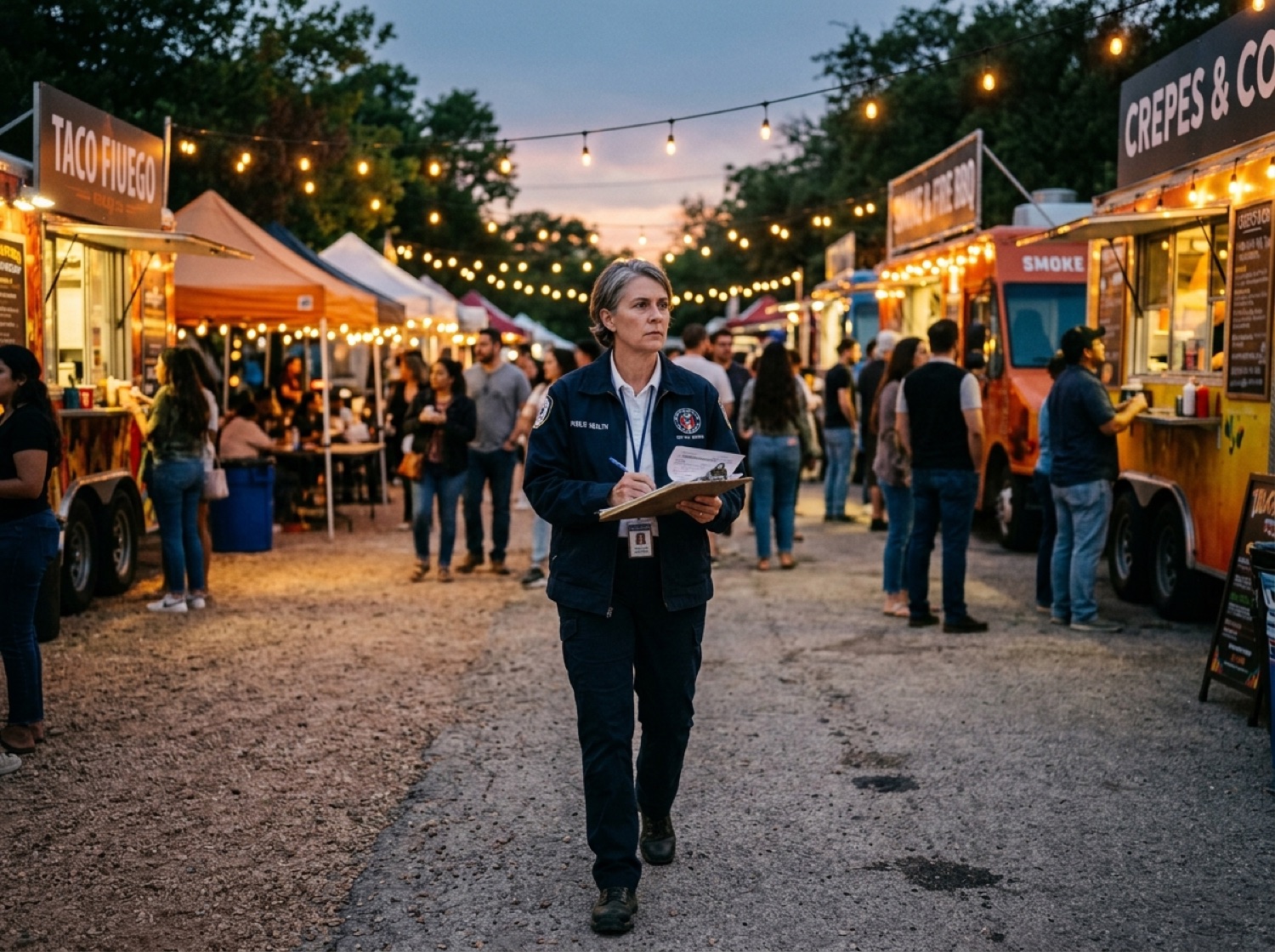
Local permits. New Jersey food truck permitting is municipal — every town does it differently. Most trucks already hold health and fire permits for the towns they regularly work; if your building is somewhere new for them, they may need a local license or a fire inspection before the event. This is squarely the kind of thing your truck or coordinator should confirm, not you — but you should ask the question: "Are you cleared to operate in [town]?"
Fire safety basics. NJ fire code requires trucks to park at least 10 feet from buildings, keep propane equipment properly mounted and inspected, and carry the right extinguishers. Practically, this affects exactly one thing you control: where the truck parks. Which brings us to —
Step 6: Plan the site like a 30-minute logistics exercise
Walk the parking lot once and answer five questions:
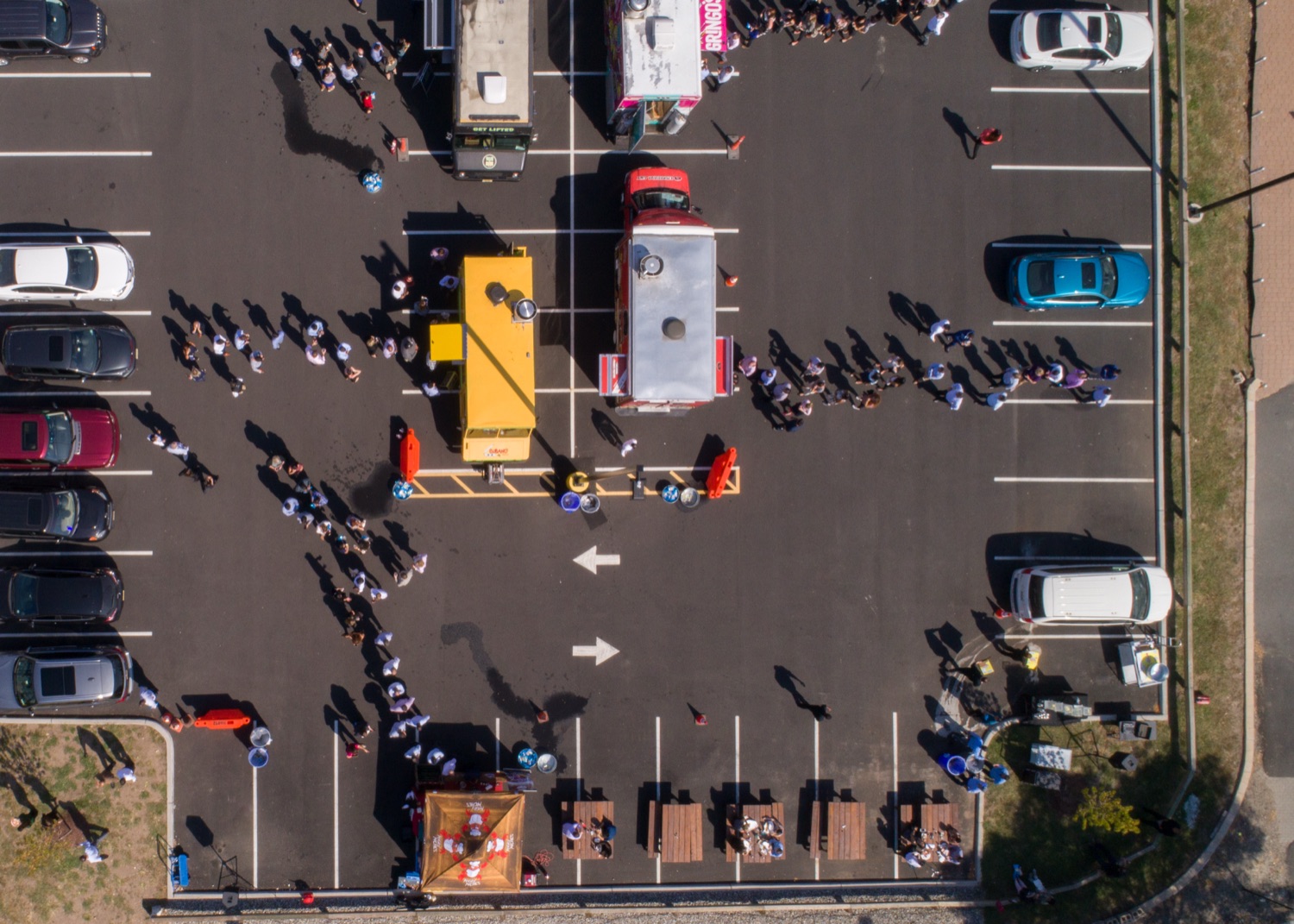
- Where does the truck park? It needs about two parking spaces' worth of level ground, at least 10 feet from the building, not blocking fire lanes or accessible spaces.
- Where does the line form? Pick a spot where 40 people queueing won't block the lobby doors or a drive aisle.
- Where do people eat? Outdoor tables, a nearby lawn, or back at their desks — any answer is fine, but have one.
- When does the truck arrive? Trucks typically arrive 45–60 minutes before service to set up and start cooking. Tell security and the front desk so the truck isn't stuck at a gate.
- What's the rain plan? Trucks serve in light rain without drama. For real weather, know in advance whether you're moving the date or moving the line indoors while the truck serves from the curb.
One thing you can skip worrying about: power. Trucks run their own generators and water — they need nothing from your building.
Step 7: Run the day — and measure it
Day-of, your job is small: confirm the truck's ETA that morning, make sure the parking spot is actually empty (cone it off the night before if you can), and announce the event internally one more time an hour before service.
Afterward, capture two numbers — how many people were served and what you spent — and a quick pulse on what people thought. If it landed (it usually does), that data is your case for making it recurring. A monthly truck rotation is one of the highest-ROI perks a building or employer can run: real morale impact, zero kitchen, zero cleanup, and a different menu every time.
The shortcut version
If you'd rather not project-manage seven steps, that's the entire reason Food Trucks On The Move exists. Tell us your date, building, and headcount. We match the truck, send one quote, handle the COI and the local permitting questions with your property manager, and have a backup truck on call. One coordinator, one quote, and your only day-of task is showing up hungry.
FAQ
How far in advance should I book a food truck for an office event?
Two to four weeks for a typical weekday lunch; six to eight weeks for December or peak-season dates.
Does my office building have to approve the food truck?
Yes — if it's a multi-tenant building or managed campus, the property manager or facilities team must approve the location and will almost always require a certificate of insurance first.
What insurance does the food truck need?
General liability at $1M per occurrence / $2M aggregate is the standard commercial-property requirement, with a COI naming the property as additional insured. The truck (or your coordinator) provides this; you just supply the building's legal entity name.
How many food trucks do I need?
One truck comfortably serves about 75–100 people per hour. Under 100 guests with a flexible window: one truck. 150+ guests all breaking at noon: two.
Does the truck need power or water from the building?
No. Trucks are self-contained — they bring their own generator and water.
What happens if it rains?
Trucks serve in light rain as usual. For severe weather, agree on a reschedule policy when you book — most trucks will move the date at no charge with reasonable notice.